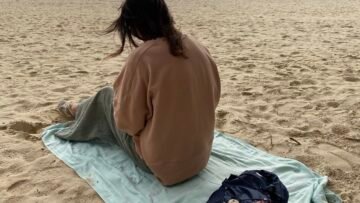
My mornings are now one of the most important and grounding parts of my day.
They weren’t always like this. For a long time, mornings were about checking on and getting through symptoms. Now, they’ve slowly become a space where I reconnect with my body and set the tone for the day.
Before my diagnosis, I would often wake up and just lie there, staring into space. The first thing I did was think—about everything that was wrong, everything that was worrying me, everything I needed to solve before I even got out of bed. If only I knew then, that the real things to worry about where yet to come…
After the onset of PPPD (persistent postural perceptive dizziness), mornings became something I kind of dreaded. Each new day carried the hope that things might be better, only to wake up and feel the dizziness was still there. There were a lot of mornings where I cried before I even started, because everything felt so heavy, so exhausting, so hopeless at times. Getting out of bed felt like effort. Like I had to fight my way into the day and usually was relieved when it was over and I could lie back on my bed and go to sleep at night, having made it through another day. I had these two affirmations before going to bed from my favourite online yoga teacher, Kassandra: They were – “I did my best today, and that’s enough” or“I release all worries, tomorrow is a new day”. Here is the link to her beautiful 5 minute guided evening meditation with positive affirmations.
Over time, I slowly started building small rituals in the morning that helped me feel a little more anchored.
Nowadays, my mornings look like this:
I usually wake up and while I am still in bed I think of a few things I am grateful for. It can be something as simple as being grateful for my fluffy pillow or nice view out the bedroom window. After I get up I start with tongue scraping, dry brushing, and a glass of water. Simple things that gently bring me into my body.
Then I go outside with my dog. That walk in fresh air is something I really value, it awakens me and brings me into the day. Afterwards he gets fed and then I continue with my latte “ceremony” which I always look forward to. Something so simple, but it has brought and brings me joy.
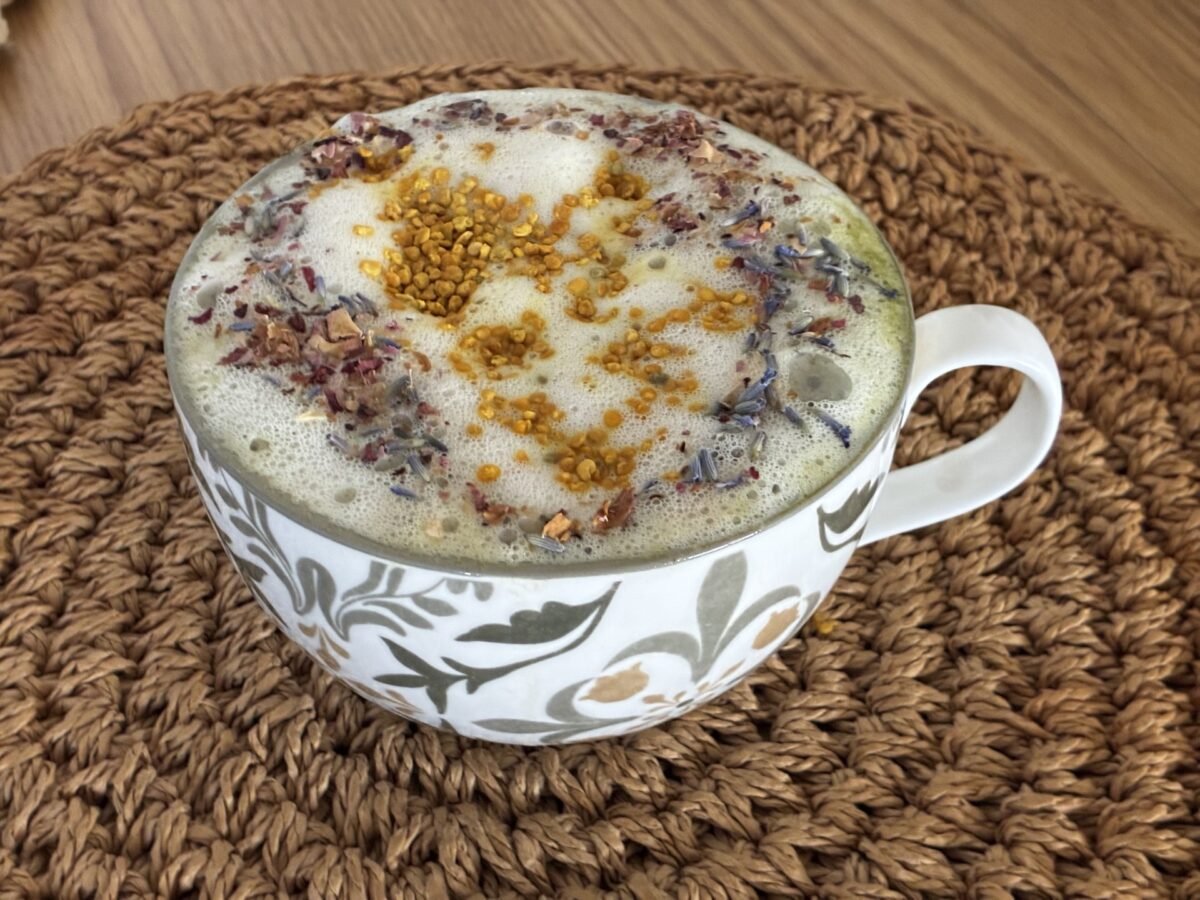
I prepare either a chai latte or matcha latte. I tend to be quite intentional with it, very much like a small ritual. For example, my matcha is often made with rose water, rose petals, lavender buds, or a little lavender syrup. Sometimes I also sprinkle some bee pollen on top and add a teaspoon of MCT oil. This morning tea ritual became much more meaningful in my healing journey than I ever expected.
During my lowest period, I came across posts in the Facebook group of the Rock Steady Programme which I was doing by Joey Remenyi about neuroplasticity and the importance of noticing non-dizzy moments, no matter how small, and reconnecting with that feeling.
At the time, I remember thinking: What non-dizzy moments? I don’t have any for God’s sake! What is she talking about!
But one morning, something shifted.
I was sitting outside with my chai latte, looking at the flowers on my terrace. I could feel the warmth of the cup in my hands, I could smell the chai, and I was just there—without analyzing, without fear, without checking in on symptoms.
And then I noticed it.
For maybe 30–60 seconds… there it was. A moment that wasn’t dominated by dizziness.
That was the first time I had a glimpse of hope again, that someday things might be ok again.
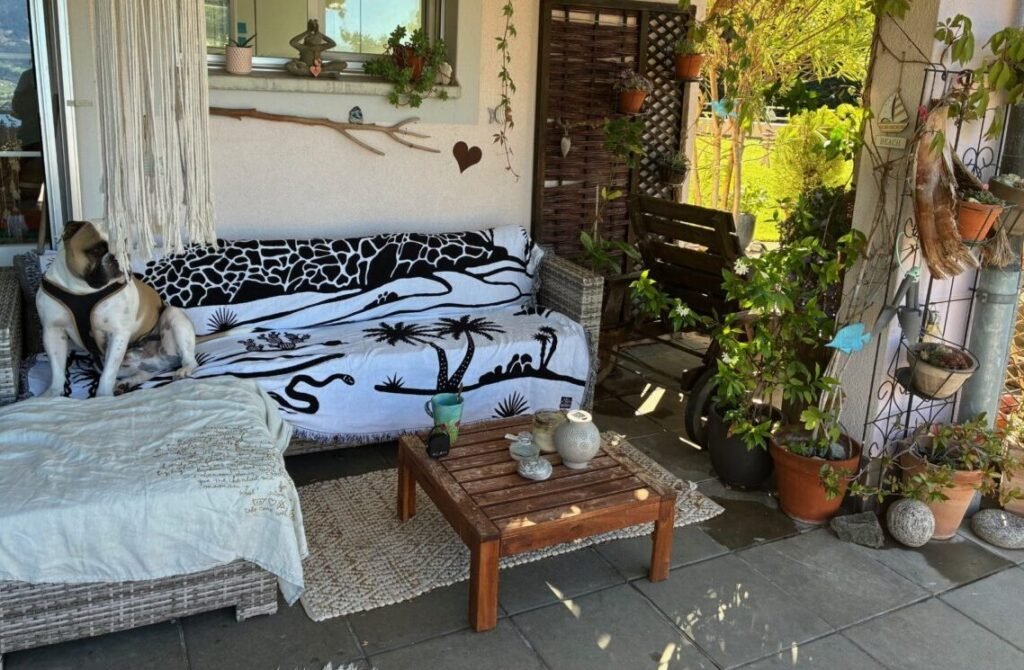
From there, I slowly built on those small moments.
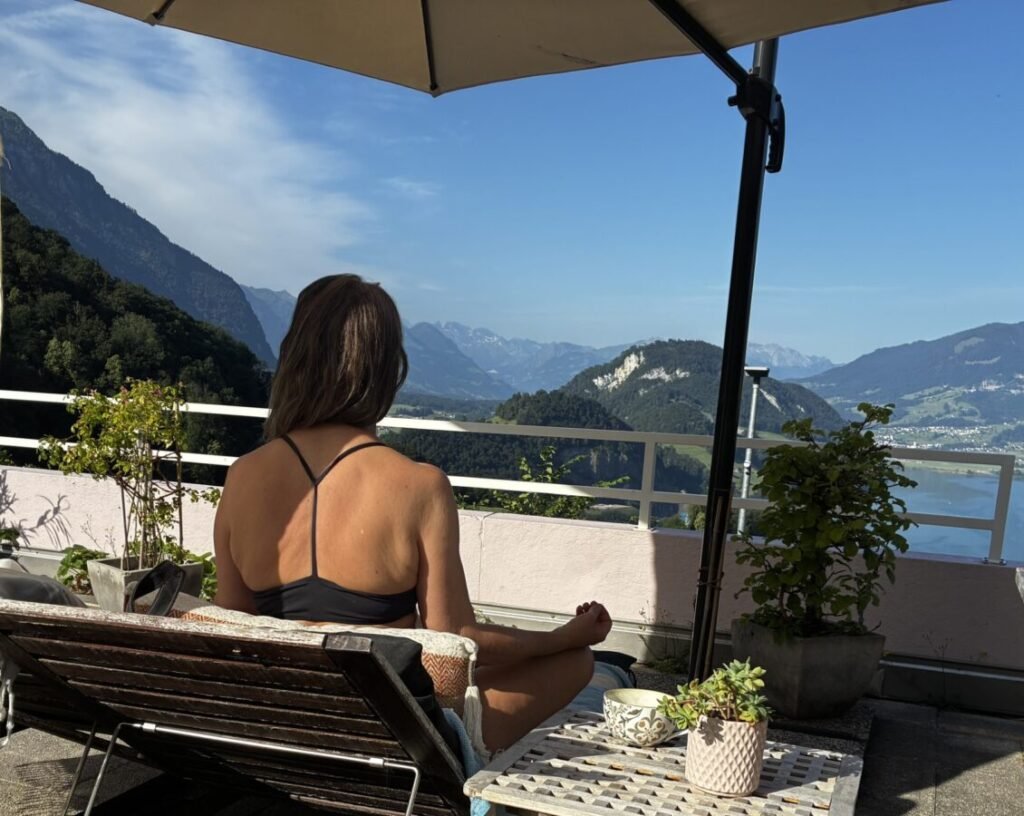
After my chai ritual, I move into meditation and yoga. Ideally, I would meditate first, but in reality it doesn’t always happen that way—and I’ve learned to accept that. (I share the practices and teachers I use on my resources page.)
Now, I actually savour moments like meditation and sitting still. For a long time I couldn’t do that at all—during the worst phase of PPPD, even a simple meditation felt impossible.
Before the diagnosis, when I tried to meditate, I couldn’t even count my breaths to ten before my mind would wander. I thought I wasn’t a meditator, but I learned that the mind wandering is normal. “It’s a sign you are alive!” – says my favourite meditation teacher, Davidji. You just gently return to the mantra or breath. (That’s why I like mantra and guided meditations 😉)
Then I do EFT tapping, usually focusing on one theme per week, with a weeks space between themes. On work mornings (I work part time), I sometimes move tapping to the afternoon instead.
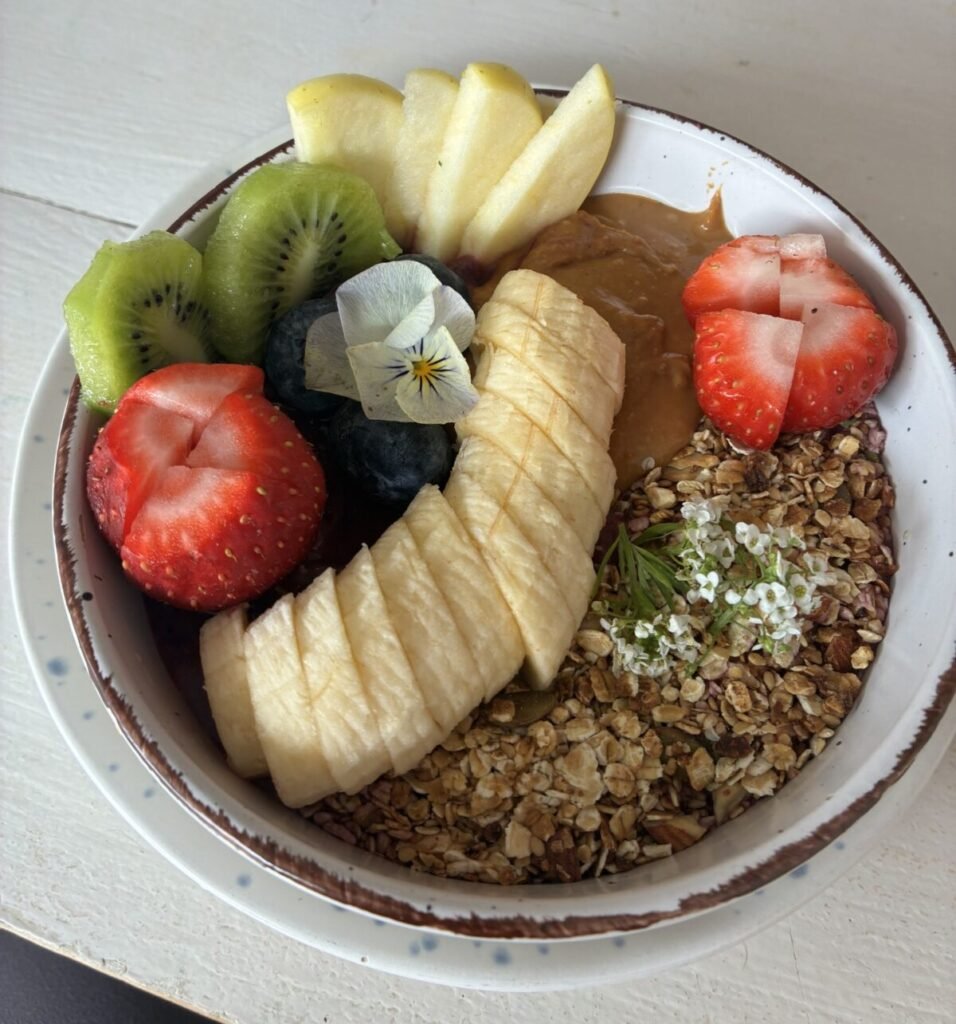
Only after all of this do I have breakfast. I don’t rush it. It’s usually something simple and nourishing like porridge with berries, banana, moringa powder and maple syrup, or a bowl with granola, fruit, and vegan skyr or yoghurt, or just a shake/smoothie. Afterwards I take my supplements.
I’m still looking for a good weekly pill box made from natural materials with separate morning and evening sections—something simple, functional, and not plastic-heavy, because I’ve realised that handling so many different supplement packages each morning and evening can sometimes feel overwhelming or irritating. Update: I found one at Sunday.de! The insert where the pills are stored is made from plant-based, biodegradable PLA & PBS (derived from starch). Unfortunately it doesn’t have an am/pm divider but I just bought two instead. Here ist the link to it. I was leaning toward a wooden one first but I think this is better for cleaning etc.
This routine didn’t appear overnight. It developed slowly, as my nervous system started to feel a little safer again. And of course it is and should be different for everyone. And in my opinion it also shouldn’t be a huge list of “to-do’s” but things that really benefit you and bring you joy and you find easy to do, not a list of chores.
In my next post, I’ll share the one thing I would personally change first if I could only start with one shift in my home environment. I am speaking of home detox. See you there!