Resolving PPPD was more complex than I ever imagined and took almost four years. Even now (five years in), I do on rare occasions experience very mild symptoms. The difference is that today I have the tools to navigate through them without falling into fight-or-flight mode, and they usually pass within a few minutes.
After receiving my diagnosis at the Dizziness Center of the University Hospital of Zurich with very kind and highly skilled staff, where I spent a full day undergoing tests, I finally knew what was “wrong” with me. I was prescribed physiotherapy and given a list of therapists in my region, so I started the following week.
Early Struggles
Unfortunately, it helped only a little. The physiotherapist rushed through the balance exercises and quickly moved on to the next patient. There was no time to listen, no space for empathy—exactly what I needed most at that stage. When I asked about the chances of full recovery, she said that some people manage to heal, but most have to live with residual symptoms. I stopped going after eight of the ten prescribed sessions.
What made a huge difference later on was my craniosacral therapist. She provided precisely what was missing at that time: deep listening, compassion, and a safe space. Her sessions were not only physically calming but also emotionally supportive. In many ways, she became a gentle anchor throughout my healing process and I still go to see her regularly.
I searched in many directions for “a cure” because I was miserable. My life had come to a halt. I dragged myself to work for the two hours I had to be present at the office (the rest of the time I was allowed to work from home) and sometimes just sat in my chair, hoping I wouldn’t faint or fall off it. I never did faint—it was just the constant sensation—and that alone was awful enough. From the outside, no one could see what was happening inside me.
I remember having tickets for Elton John’s farewell tour and truly believing I would be well enough by then. When the time came, I couldn’t even imagine entering a stadium. Selling those tickets felt like giving up on a version of life I feared I might never get back.
I walked very carefully, almost unnaturally, as if the ground were uneven even when it wasn’t. When standing still, I constantly shifted my weight from one foot to the other because I felt like I was on a boat. I felt observed and sometimes ridiculed, even though I’m not sure today whether anyone truly noticed.
Finding Small Steps
My naturopath referred me to a myoreflex specialist who visited his practice every few months. After the first session, he suggested an intensive retreat at his center in Konstanz, Germany. It didn’t heal the PPPD, but it gave me something incredibly important: empowerment. I went on my own, stayed in a hotel for two nights, and walked to the center several times a day for treatments. I felt heard there.
I later attended an anthroposophic retreat in Ascona, Switzerland, at Casa Andrea—a beautiful place nestled in the hills overlooking the lake. I stayed for two weeks, and it was a wonderful time out. I only went for massage once because I didn’t tolerate it well; the movement during the massage intensified my PPPD symptoms. I did enjoy the “Wickel” (compresses), usually after lunch in my room. I would lie there and listen to a meditation.
I also experienced healing art therapy and Therapeutic Eurythmy (a gentle, movement-based therapy from anthroposophic medicine). Unfortunately, only once because the therapist fell ill—but that single session became a milestone. The teacher stopped me mid-movement and said:
“Stop—you are ducking, not walking upright. Walk upright and proud. Slow down. Move your hips deliberately and keep your head up.”
I usually kept my head tilted toward the ground, searching for stability. To my surprise, this simple correction made me feel noticeably more stable.
I went on daily walks, often to Monte Verita nearby, with its forest paths and lake views. These walks—and the fact that I had driven on my own 2 hours all the way from my home there to this retreat —were small but powerful stepping stones.

“Moments of stillness at Monte Verita. Learning to trust my body, step by step”.
Building Resilience
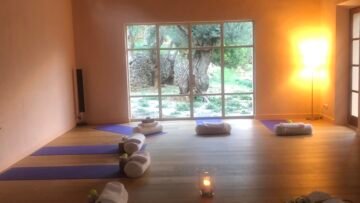
Later, I joined an online program led by a Canadian physiotherapist specializing in dizziness, together with a woman who had previously healed from PPPD. Their Zoom classes, Yoga for Dizziness, helped me rebuild trust in my body.
She gently guided us into movements we could hardly imagine doing at the time—simple things like looking down to wash the dishes, kneeling to pat my dog, or even turning my head too quickly would worsen my symptoms. So when she slowly invited us to try more “difficult” poses, it felt challenging and vulnerable. Yet, with her calm guidance, we eventually even ended up in downward-facing dog.
Much of the vagus nerve regulation happened organically through yoga and meditation. In the beginning, I couldn’t even sit upright to meditate—everything had to be done lying down, as sitting would worsen my symptoms. When lying down, I often felt as if I were a buoy floating on the ocean: weightless, unstable, and constantly moving. It was a strange and unsettling sensation. Over time, I developed a simple visualization that helped immensely. I imagined someone gently pulling the plug, allowing the water to slowly drain away until there was no more water to float on and I had reached the bottom of the ocean. Once there, I imagined being held and grounded by the sand beneath me. This visualization helped dissolve the floating sensation and allowed my nervous system to settle. Along with slow breathing, humming or singing during intense dizziness spells, and gentle movement, these practices became powerful tools in calming my system and breaking the vicious cycle.
One important piece I haven’t mentioned yet is that, unlike many PPPD cases triggered by a single event, mine was continuously fueled by an underlying cardiac arrhythmia. The arrhythmia and the PPPD were feeding each other in a vicious cycle, which made it especially difficult to break.
The Canadian physiotherapist explained how crucial nervous system regulation and vagus nerve stimulation can be in situations like mine. She suggested that calming the nervous system might help interrupt the loop between dizziness and heart rhythm disturbances. At the time, I was skeptical. I had been told by multiple clinicians that my arrhythmia was caused by scarring on my heart due to an autoimmune condition—something that wouldn’t simply go away.
I also couldn’t take beta blockers to ease the arrhythmia because I already suffered from very low blood pressure.
Still, as I leaned into the practices I’ve described—mindfulness, breathwork, gentle movement, and finding small moments of calm without dizziness—something unexpected happened. I also began consciously stimulating my vagus nerve in simple ways, such as humming or singing during intense dizziness spells. Gradually, the arrhythmia began to decrease.
Around the same period, I switched to a completely gluten-free diet. Whether that played a role or not, I can’t say. What I do know is that six to twelve months later, a 48-hour ECG showed that my arrhythmia had dropped by about half. My cardiologist couldn’t fully explain it. He suggested that the heart may have adapted and learned to work “around the scars.”
With fewer extra beats and pauses, the PPPD was no longer being constantly fueled. For the first time, I could truly focus on healing.
Today, when I experience periods of increased arrhythmia—often triggered by antibiotics or seasonal changes—it no longer spirals into PPPD. I know how to regulate my nervous system, I trust my body, and I know it will pass.
I loved practicing yoga daily. It gave both my mind and my body a break from the constant fight-or-flight loop I had been stuck in, as I focused on my breath and gentle movement. On bad days, I would simply do some Yin yoga or light stretching. Someone else, however, often claimed the mat first…
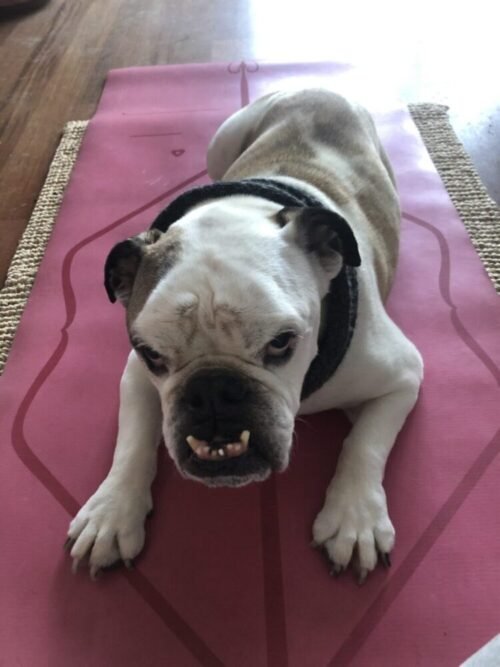
“Even my yoga practice had a little helper.”
The Breakthrough: The Rock Steady programme
The real breakthrough, however, was the Rock Steady Program by Australian Joey Remenyi, through SeekingBalance.com. I started with the free program, then bought the book, and eventually enrolled in the full program, which you have lifetime access to. It includes modules, live calls, and a community of people dealing with chronic dizziness and tinnitus. Through this programme I was also introduced to EFT Tapping, a tool I still use today.
The core principle of the program is neuroplasticity—retraining the brain to recognize calm and steadiness, and learning to extend those brief moments of stability as new neural pathways are formed. From that point on, my healing progressed significantly, though very slowly at first.
I could finally sit still and enjoy my morning chai ritual on the terrace without feeling dizzy—first for 30 seconds, then a minute. For a few weeks, those moments appeared sporadically. Then they grew into minutes, hours, whole days, and eventually most days. Altogether, this process took about two years until I was symptom-free.
Once I had more good days, I started habituation: longer walks with my partner using walking sticks, then alone with sticks, then alone without sticks and so on. I went to IKEA with my partner, then by myself. Later, I tried a funicular, a short boat ride—things that would have triggered symptoms in the past.
Little by little, the light came back.
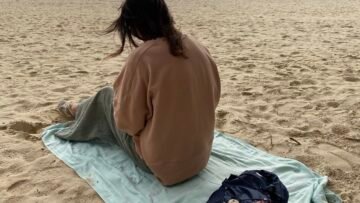
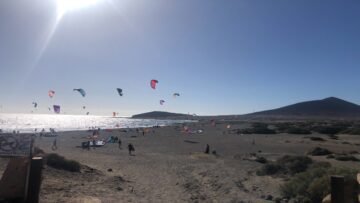
I love traveling, but for years I couldn’t—especially not by plane. Our first car trip to France was a big win. Swimming in the ocean and walking on sand were extremely challenging, but I kept trying until my brain felt safe again. It wasn’t always easy. Sometimes I pushed myself too far and ended up in tears—something as simple as sitting in a restaurant could feel overwhelming.
Traveling the world again was my biggest dream. We even went to the airport just to “pretend”: standing in the check-in line, watching planes land. I cried tears of joy, realizing that flying again might soon be possible. A few months later, I took my first short flight to Mallorca (1.5 hours), followed by a medium-haul flight, and last year I flew to the US. This year, I will even fly to Australia on my own!
What Helped Me Heal from PPPD
Here are the key pillars that supported my recovery:
- The Rock Steady Program – neuroplasticity and guided exercises
- Yoga, meditation, breathwork
- Craniosacral therapy and emotional support
- EFT tapping, which I continue to use today
- Gentle but consistent habituation (doing things outside my comfort zone, even if symptoms temporarily worsened)
- Walking upright and deliberately slowly
- A lot of self-love and self-compassion, especially when I felt like my body was failing me
- Never losing hope and keeping my dreams alive
Everyone’s path with PPPD is different. Some recover more quickly, others slowly. There are common pillars—but each person must find their own rhythm and capacity.
Today, I am traveling, enjoying life, and deeply grateful for the simple joy of walking down a street without fear or tears. These are things we so easily take for granted.
✨ In upcoming posts, I’ll be sharing my morning routine, non-toxic home practices, travel experiences, and more. See you there!